
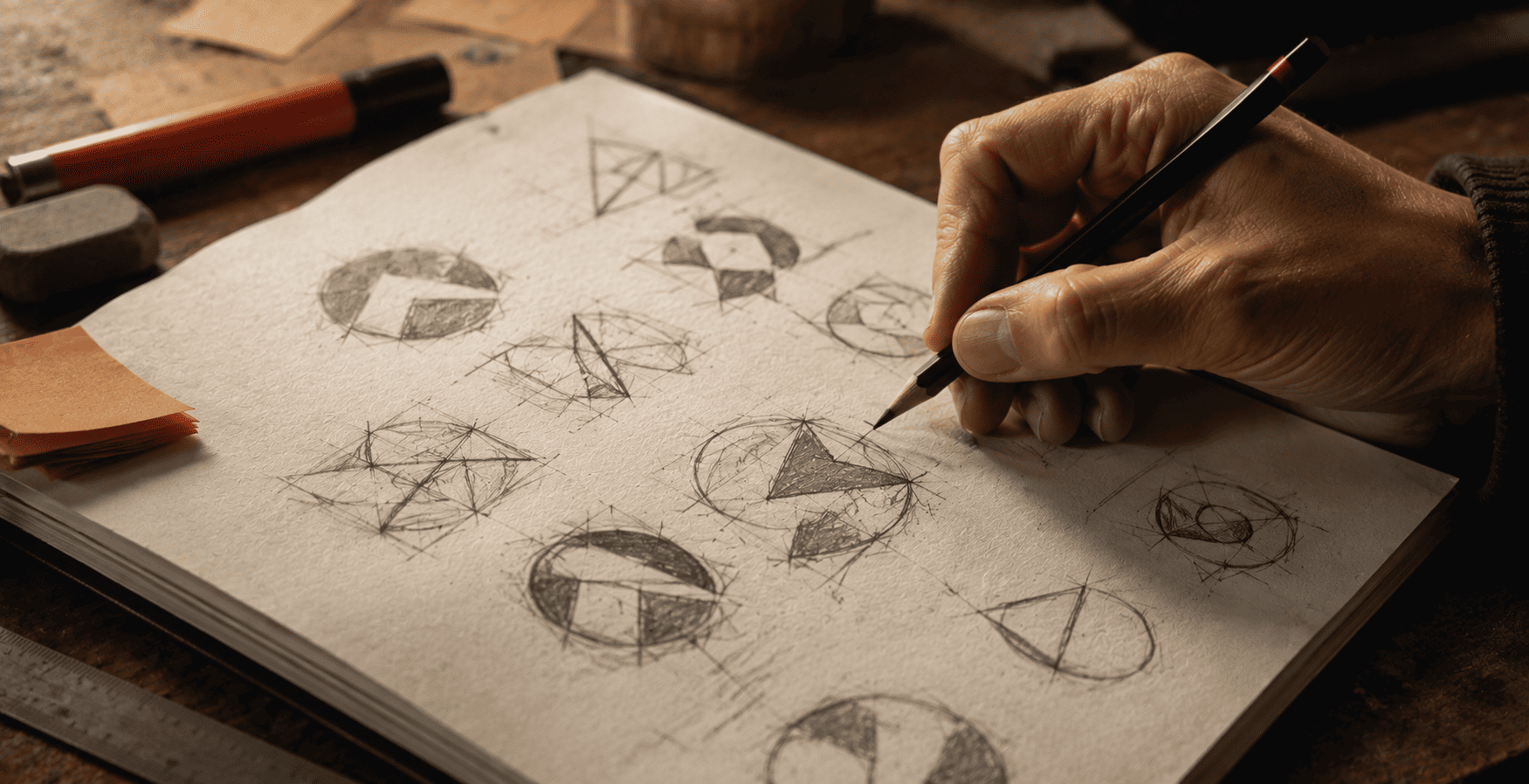
Remember what the internet felt like around 2016? Logos were simple. Photos looked like a real person took them on a real phone. Brands had a little wobble and a lot of personality, and nobody minded if things were not perfect. A decade later, something surprising is happening. After years of flawless, glossy, machine-made design, people are quietly missing all of that. The imperfect, handmade, human look is back. In a real sense, 2026 is the new 2016.
This is not just nostalgia. It is a reaction to how the web looks today. When everything is polished by the same tools, everything starts to look the same. And when everything looks the same, the human things stand out. Here is the story of how we got here, and what it means for your brand.
Back When It Felt Handmade
Picture a small bakery site from ten years ago. The logo was drawn by hand and slightly crooked. Instagram was full of grainy, honest photos before the age of heavy edits. Blogs read like a real person wrote them, typos and all. It was not always polished, but it felt true. You could tell a human made it, and that was the charm.
Then design got very good at being perfect, and that is where the trouble started.
- Same clean template everyone uses
- Glossy stock photos of strangers
- Safe, neutral fonts
- Polished, and instantly forgettable
- A layout with its own quirks
- Real photos of real people
- Warm type with character
- Imperfect, and hard to forget
We Made Everything Perfect, Then Got Bored
Perfect is impressive for about five seconds. Then it fades into the background. When every website uses the same clean layout, the same smiling stock models, and the same tidy fonts, your brain simply stops noticing. It all blurs into one.
AI pushed this further. Not because it is bad, but because it is everywhere. So much content now comes from the same handful of tools that a strange sameness has spread across the internet. People feel it, even if they cannot name it. And the natural response to too much sameness is to crave something real, something with a fingerprint on it. That is also why a brand has to stand out just to get found now, which we dug into in our guide to Generative Engine Optimization and why ranking on Google isn't enough anymore.
- 80%of creators say 2026 is the year we regain creative control from algorithms and automation.
- 90%rise in searches for DIY and scrapbook-style design elements, year over year.
- 54%rise in searches for clean layouts, serif fonts, and simple, honest branding.
- 30%rise in searches for tactile, textured design that focuses on how a thing feels.
Human Design, Not Sloppy Design
Imperfect design does not mean messy. It means design that shows the human hand instead of hiding it. The easiest way to understand it is to see it next to its opposite.
Feels human
- Hand-drawn logos and doodles
- Real, grainy photos of your team
- Warm serif type with personality
- Visible texture, paper, and ink
- Writing that sounds like a person
Feels generic
- The same logo everyone has
- Polished stock photos of strangers
- Cold, safe, default fonts
- Flat, flawless, empty surfaces
- Corporate buzzword filler
Perfect gets your attention for a second. Human keeps it, because people trust what feels real. The heart of the 2026 shift
Human Design Is Good for Business
This is not only about taste. A human touch does real work for a brand. It builds trust, because honest and slightly imperfect design signals a real business with real people behind it. It makes you memorable, because in a sea of identical, AI-polished brands, the one with personality is the one people actually remember.
Most of all, it creates connection. People do not fall in love with flawless. They fall for character, for the small details that feel like you. That feeling is what turns a first-time visitor into a loyal customer, and it is the one thing a generic template can never hand you.
Five Ways to Bring the Human Touch Back
You do not need to rebuild everything. A few honest choices go a long way.
- Use your real photos. Swap a few stock images for real ones of your team, your space, and your actual work. Nothing builds trust faster.
- Add one handmade element. A hand-drawn mark, a signature, or a small doodle. One personal touch can warm up a whole brand.
- Write like a person. Read your website out loud. If it sounds like a robot, rewrite it the way you would explain it to a friend.
- Bring in texture. A little grain, a soft shadow, or a warm feel adds depth and stops your brand from looking flat and generic.
- Show the process. Share rough sketches, works in progress, and behind-the-scenes moments. People love seeing how things are made.
Want a brand that feels human, not generic?
We design warm, characterful brands and websites that stand out in a world of look-alike, AI-polished sameness.
Let's build yoursImperfect Is Not an Excuse for Careless
There is a catch worth saying out loud. Wonky and warm still has to be clear, readable, and well made. The best human design is deeply deliberate. Every rough edge is a choice, not an accident. If you skip the craft and just make things messy, it does not read as authentic, it reads as unfinished. Aim for real, not sloppy.
In a World Full of Perfect, Be Human
The pendulum is swinging back. After years of chasing flawless, people want design that feels made by humans, for humans. The imperfect touches we left behind around 2016, the hand-drawn marks, the real photos, the honest voice, are exactly what make a brand feel warm and trustworthy in 2026.
If your brand feels a little too polished, too safe, or too much like everyone else, this is your moment. Put your own fingerprint back in. Being human is the smartest way to stand out.
Ready to add a human touch to your brand?
The Designers World builds brands and websites with real character, made to connect and built to convert. Let's talk about yours.
Start a project